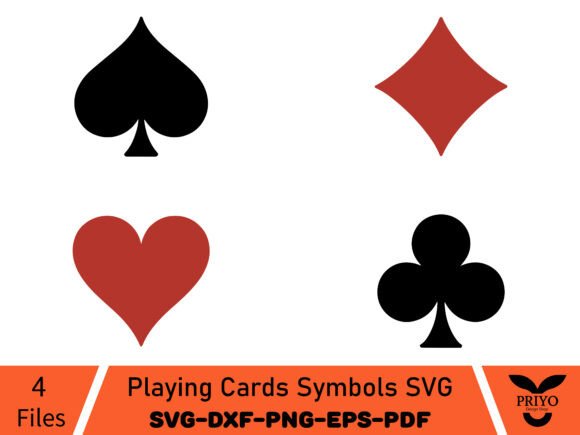
Playing Cards Symbols SVG
A Designer’s First Glance: Clean, Classic, and Quietly Confident
When I opened Playing Cards Symbols SVG for the first time, I didn’t see flashy novelty—I saw quiet confidence. Four crisp symbols—heart, spade, diamond, club—arranged with balanced negative space and consistent stroke weight. No gradients, no drop shadows, no forced “cute” tweaks. Just clean, scalable vector forms that breathe well on fabric. It feels like a design made *for* embroidery, not just adapted to it. That matters—especially when you’re stitching a custom embroidered tote bag for a local boutique or prepping baby onesies for an Etsy launch.
Where This Design Naturally Lands (and Why It Sells)
I recently used Playing Cards Symbols SVG as the central motif on a linen apron for a small-batch kitchen goods shop. The heart and spade were stitched in deep burgundy thread on natural flax—minimal, timeless, and instantly legible at arm’s length. That’s the sweet spot: products where clarity, charm, and craftsmanship converge. Think sweatshirt embroidery for a poker night gift, embroidered patches for bar staff uniforms, tea towel designs for a craft fair booth, or nursery decor where subtlety reads as sophistication—not sterility.
It works because it doesn’t shout. It invites. A customer picking up a handmade product with this design isn’t buying “playing cards”—they’re buying nostalgia, wit, elegance, or shared language. That resonance lifts perceived value. For an Etsy seller, that means better conversion. For a craft business owner, it means repeat buyers who trust your eye.
Real Embroidery Behavior: What Holds Up—and What Needs Care
Playing Cards Symbols SVG is forgiving on stable fabrics—cotton twill, midweight denim, canvas tote bags—but demands attention on trickier surfaces. On stretchy knit sweatshirts? You’ll need cutaway stabilizer and possibly reduced stitch density to avoid puckering around the curves of the heart or club. On dark fabric, test thread contrast early: a light gray satin stitch on charcoal can vanish unless you add a subtle underlay or choose a matte metallic thread for lift.
Small hoop sizes (under 4”) are doable—but only if you isolate one symbol at a time. Trying to fit all four in a tight hoop risks crowding corners and losing definition in the fine points of the spade or diamond. And on textured fabrics like terry cloth or bouclé, simplify further: use running stitch outlines instead of dense fill stitches, or treat the design as an applique design base rather than a fully stitched motif.
Curved surfaces—like caps or curved pillow covers—require repositioning each symbol individually. Don’t force symmetry across a dome; let the heart sit cleanly over the crown, the club anchor the side seam. That human adjustment is what makes a commercial embroidery project feel intentional, not automated.
Design Assets That Support, Not Sabotage, Your Brand
This isn’t just a graphic—it’s part of your design assets toolkit. As a digital embroidery file, Playing Cards Symbols SVG scales cleanly for printable mockups (great for Instagram listings or wholesale line sheets), and its simplicity means it translates well into black-and-white line art for packaging stamps or woven labels. But remember: its strength is restraint. Don’t overload it with extra flourishes in your editing software—its value lies in its uncluttered voice.
For holiday embroidery or wedding gifts, pair it thoughtfully: a single club stitched discreetly inside a cuff, a tiny heart on a handkerchief corner. Overuse dilutes impact. Let it punctuate—not dominate.
Practical Notes Every Embroidery Designer Should Run Through
- Test on scrap fabric first—especially if using textured, dark, or stretchy material. Stitch density and thread tension behave differently off-screen.
- Check thread color contrast in natural light and under store lighting. What reads rich on your monitor may look muddy on garment fabric.
- Review stitch density before sending to machine. High-density fills can stiffen lightweight baby embroidery or reduce drape on a linen pillow cover.
- Confirm hoop size compatibility with your frame and fabric thickness. Some versions may require resizing—always scale proportionally from the center.
- Inspect small details at actual stitch-out size: Are the inner angles of the spade sharp enough? Does the diamond’s point hold without fraying?
- Test black-and-white mockups to verify readability—many customers browse in grayscale mode or print listings.
- Compare performance on light vs. dark fabric backgrounds. Adjust underlay or stitch order accordingly.
- Use proper stabilizer: tear-away for stable wovens, cutaway for knits, and fusible + tear-away for lightweight silks or rayons.
- Verify licensing before selling finished products or bundling Playing Cards Symbols SVG into digital product packs. Since it’s listed under Illustrations and Graphics, confirm whether it’s cleared for commercial embroidery use and resale of physical items.
Final Thought: A Design That Earns Its Place
Playing Cards Symbols SVG won’t wow with complexity—but it earns trust through consistency, clarity, and quiet versatility. It fits seamlessly into a custom apparel workflow, supports a thoughtful craft business strategy, and holds up under real-world wear and washing. Whether you’re stitching a personalized gift, building a boutique brand, or sourcing reliable design assets for client work, this is the kind of embroidery file that disappears into the background—so the product, the person, and the purpose shine through.
That’s not just good design. That’s professional design judgment—applied, tested, and trusted.