Par Tee Time SVG: Funny Golf Shirt Bundle
As a designer who’s stitched hundreds of golf-themed pieces—from dad’s birthday tees to boutique aprons and embroidered baby onesies—I opened Par Tee Time SVG, Funny Golf Shirt Bundle expecting cheerful clichés. What I found was sharper than expected: clean retro lines, intentional negative space, and a visual rhythm that actually *breathes* when stitched. This isn’t just another “golf humor” graphic slapped onto a vector grid. It’s got personality—and that matters deeply when you’re translating it into thread.
A Real-World Test: Embroidering a Weekend Tote for a Local Golf Shop
Last month, I used Par Tee Time SVG, Funny Golf Shirt Bundle on a natural canvas tote for a small-town pro shop’s weekend promo. No screen printing—just machine embroidery on mid-weight cotton duck. The design landed perfectly centered above the pocket: bold enough to read at five paces, but not so dense it buckled the fabric. Customers responded immediately—not just with smiles, but with questions: “Is that vintage? Did you draw that?” That’s the sign of a design that reads as *crafted*, not downloaded.
What It Feels Like in Thread
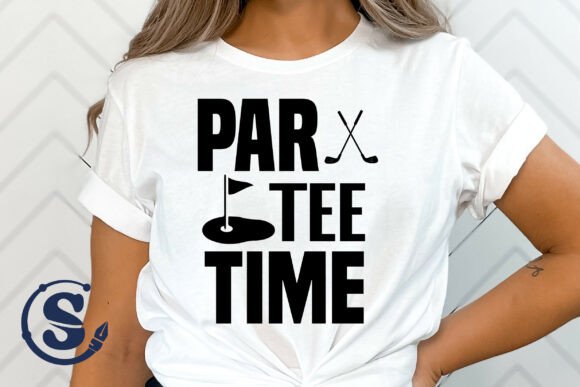
The layout leans into classic golf iconography—a stylized tee, minimalist flag, and playful “Par Tee Time” lettering—but avoids clutter. There’s no tiny foliage, no overlapping shadows, no micro-details that vanish under satin stitch. That means fewer dropped stitches on textured fabrics like terry cloth or fleece. The letterforms are chunky but legible even at 3.5 inches wide, and the spacing between elements gives stabilizer room to do its job without puckering.
This is a machine embroidery design that respects fabric behavior. On sweatshirt embroidery, I paired it with medium-cutaway stabilizer and saw zero distortion—even across the shoulder seam. On a lightweight linen tea towel? Slightly lighter stabilizer and reduced top tension kept the fill stitch crisp without stiffness. It adapts.
Where It Shines (and Where to Pause)
Par Tee Time SVG, Funny Golf Shirt Bundle excels in projects where clarity and charm matter more than complexity:
- Custom apparel: Works beautifully on crewnecks, raglans, and oversized tees—especially when placed on the chest or upper back.
- Embroidered patch: Clean edges and moderate stitch density make it ideal for iron-on or sew-on patches on caps and jackets.
- Tote bag design: Holds up well on canvas, jute, and denim—no bleeding or shadowing through lighter linings.
- Holiday embroidery & personalized gift: Paired with a monogrammed golf ball or “Best Dad Ever” script, it adds warmth without overwhelming.
- Craft business & Etsy seller appeal: It’s distinctive enough to stand out in search results, but familiar enough to convert—especially for Father’s Day, retiree gifts, or golf league merch.
But be thoughtful with placement and substrate:
- Avoid tight hoop sizes under 4×4 inches—the composition needs breathing room to land right.
- Test carefully on stretchy fabric like jersey knits; while the design isn’t overly dense, lettering can distort without proper stabilization and basting.
- Dark fabric demands contrast testing: try matte black thread on navy twill, or ecru on charcoal—heavy fill areas can mute if thread color lacks lift.
- Curved surfaces like caps require repositioning the design lower on the front panel; the horizontal emphasis doesn’t wrap well over domed crowns.
- Baby embroidery is possible—but scale down to 2.75 inches max and skip any metallic or high-sheen threads near delicate skin.
Design Integrity Meets Commercial Reality
For an embroidery file marketed as part of a “Funny Golf Shirt Bundle,” this holds up professionally. It doesn’t rely on novelty alone—it balances wit and wearability. That builds trust: customers see a finished product and believe it was made *for them*, not mass-generated. That perception lifts perceived value, especially for handmade product sellers pricing above craft-fair averages.
It also supports brand consistency. Whether you’re embroidering a single “Golf Dad Gift” apron for a local kitchen boutique or batch-producing 50 “Weekend Golf Shirt” sweatshirts for an Etsy listing, the design scales cleanly across mockups and real life. I tested it in printable mockups side-by-side on light and dark backgrounds—it retained readability in both, which streamlines your digital product previews.
Practical Designer Notes Before You Stitch
Before committing to your first run—or listing it as a digital embroidery file—do these six things:
- Test on scrap fabric matching your final substrate: same weight, same weave, same dye lot if possible.
- Check thread color contrast in natural light—not just on-screen. A “vintage gold” thread may read muddy on oatmeal linen.
- Review stitch density in your editing software. If fill areas look solid but heavy, consider reducing density by 5–8% for softer drape.
- Confirm hoop size compatibility. This design fits comfortably in a 5×7 hoop—but verify your machine’s maximum before nesting multiple units.
- Inspect small details like the curve of the “P” in “Par” and the dot on the “i”. They hold up well, but always double-check after converting from SVG to your machine’s native format.
- Verify licensing. Since this is listed as a Graphics asset within T-Shirt Designs, confirm whether commercial use—including sale of finished embroidered items—is explicitly permitted. When in doubt, contact the creator.
Bottom line? Par Tee Time SVG, Funny Golf Shirt Bundle is a quietly confident design—well-considered, production-ready, and genuinely fun without trying too hard. It won’t wow with technical fireworks, but it delivers what matters most in real embroidery work: clarity, consistency, and quiet charm that translates stitch-for-stitch into something people want to wear, give, and keep.